Your Custom Text Here
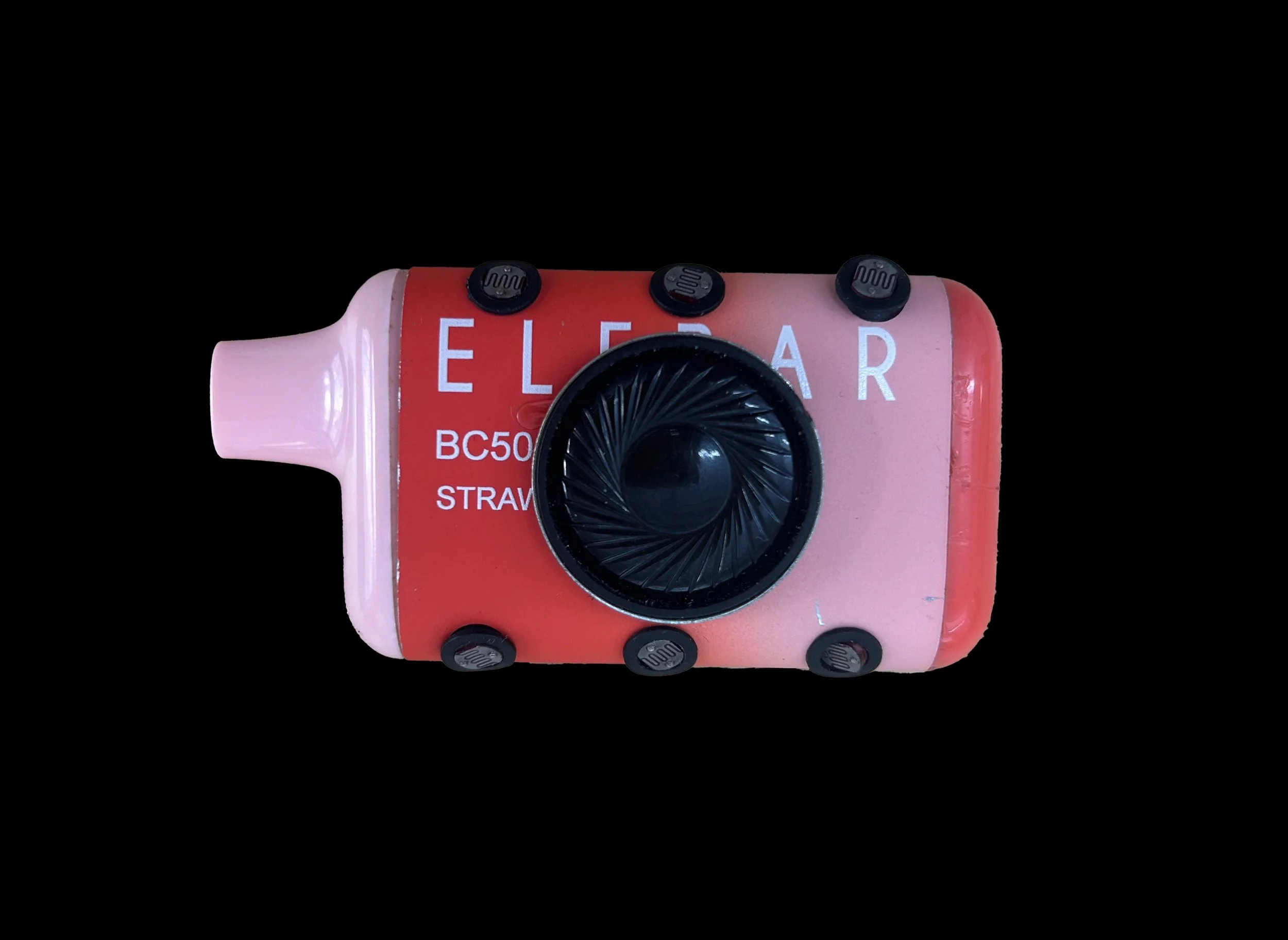
With over 11 million disposable vapes sold per month, the impact of their e-waste, including discarding rechargeable lithium ion batteries, is outsized. To highlight the salvageable parts, and divert them into Open Source Hardware projects, we are developing two models of Vape Synthesizers roughly inspired by an ocarina. Both models make use of the original batteries, charging circuit with LED, and case. The novelty model keeps its original low pressure sensor, meaning you need to suck on the instrument to play, and has an onboard speaker to jam anywhere. The (forthcoming) MIDI Electronic Wind Controller model uses a wireless connection to your existing instruments or computer music programs with audio samples to act as an alternate input device. Digital fabrication plays a role in this project for making 3D printed or laser cut jigs. Part of the underlying ethos is to make an eco-friendly hardware choice also a joyful choice.
Made in collaboration with shuang cai and David Rios, who took on the team name of Paper Bag, since they always seem to store their work-in-progress in one.
Full Tutorial is available on Instructables
Repurposing Disposable Vape Batteries: The Why, The How, and the Vape Synth
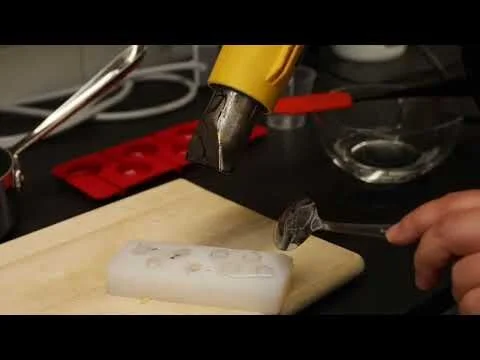
Robotics and similar technological advancements are often overwhelming or alienating. I design and build inviting and inclusive tech that can demystify while doubling as edible sculpture. Candy serves as a medium to transform cold experiences with complicated technology into exciting and accessible encounters. Candy and candy-making are lush and all-encompassing sensory experiences, which take interactivity one step further by becoming part of the user.
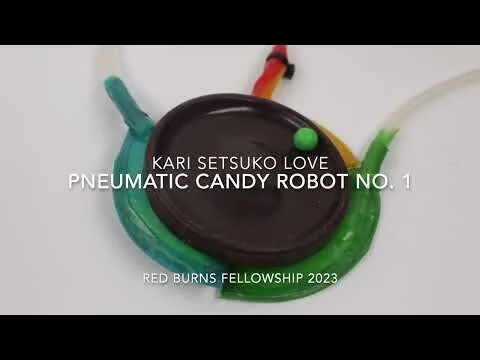
Pneumatic Candy Robot No 1 - Kari Setsuko Love
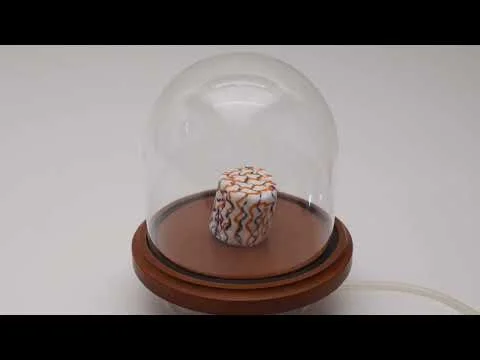
Pulsing Marshmallows - Kari Setsuko Love and Amitabh Shrivastava
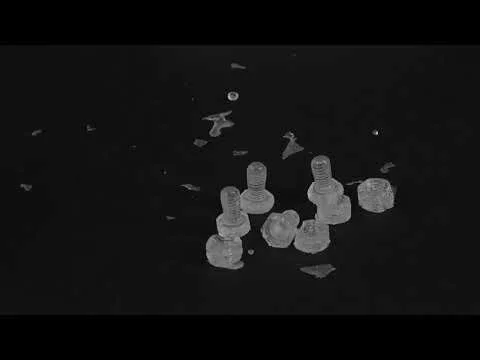
Sugar Bolts - Kari Setsuko Love
Sugar Bolts Process - Kari Setsuko Love
Edible Soft Robotics (33c3)
Emotional Intelligence in the Workplace and Care Laborer. 2024
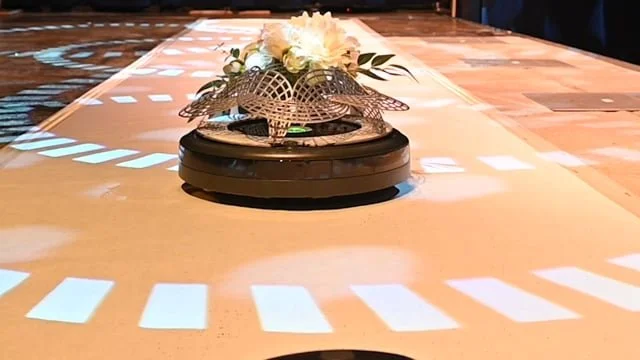
Like many others performing care tasks in the workplace, this robot carries the weight of dismissive language of those devaluing its crucial role of maintaining others’ humanity. Luckily it also has been programmed to translate toxic words into their affirming and value conferring counterparts. The dismissive words were mostly taken from real world examples gathered via interviews from human contributors, as spoken by colleagues to women and non-binary tech workers. The bridal aesthetics reference both the gendered expectation of who is considered by default responsible for care in the workplace, and the tradition of haute couture shows culminating in a wedding dress.
It was shown in “The Workwear of Tomorrow” a robot fashion show curated by Natalie Friedman, Phd
“The theme of this robot fashion show is Challenging Gender Roles through Robot Workwear. Robots can wear clothes to better fit into new contexts and adapt to new tasks. We must be thoughtful about how we dress robots, as we are now setting a precedent for the future of robot dress. While human bodies are gendered, robots are inherently not. With a new form embodying a social actor, we have the opportunity to challenge previous assumptions about gender through dressing robots. This call for artists creates an opportunity to consider gender when dressing a robot and challenge norms. These artists have considered many types of labor—physical labor, industrial labor, domestic labor, and emotional labor. Each piece in the exhibition reflects a unique perspective on the roles and gendered expectations placed on individuals in various contexts, all while promoting sustainable practices in art and design.”
Bridal Roomba
Shown at the $99.99 show at @theblanc_ny theBlanc, 15 E 40th St STE 200 (by Bryant Park)
Dates: June 29-30, 2024
Created specifically for the $99.99 call, this embellished photograph was originally intended to be made with only 2 hours of beading, and the cost/time of procuring the print. But when the timer went off, the piece felt incomplete and an additional 1 hour and 20 minutes was needed to reach the intended effect. This process highlighted normally overlooked moments of consciously deciding to reduce the value of the artist’s labor in the effort to realize a particular vision, cleaning work space after creating, and excluding the labor and travel already dismissed as sunk cost (taking a photograph in Antarctica).
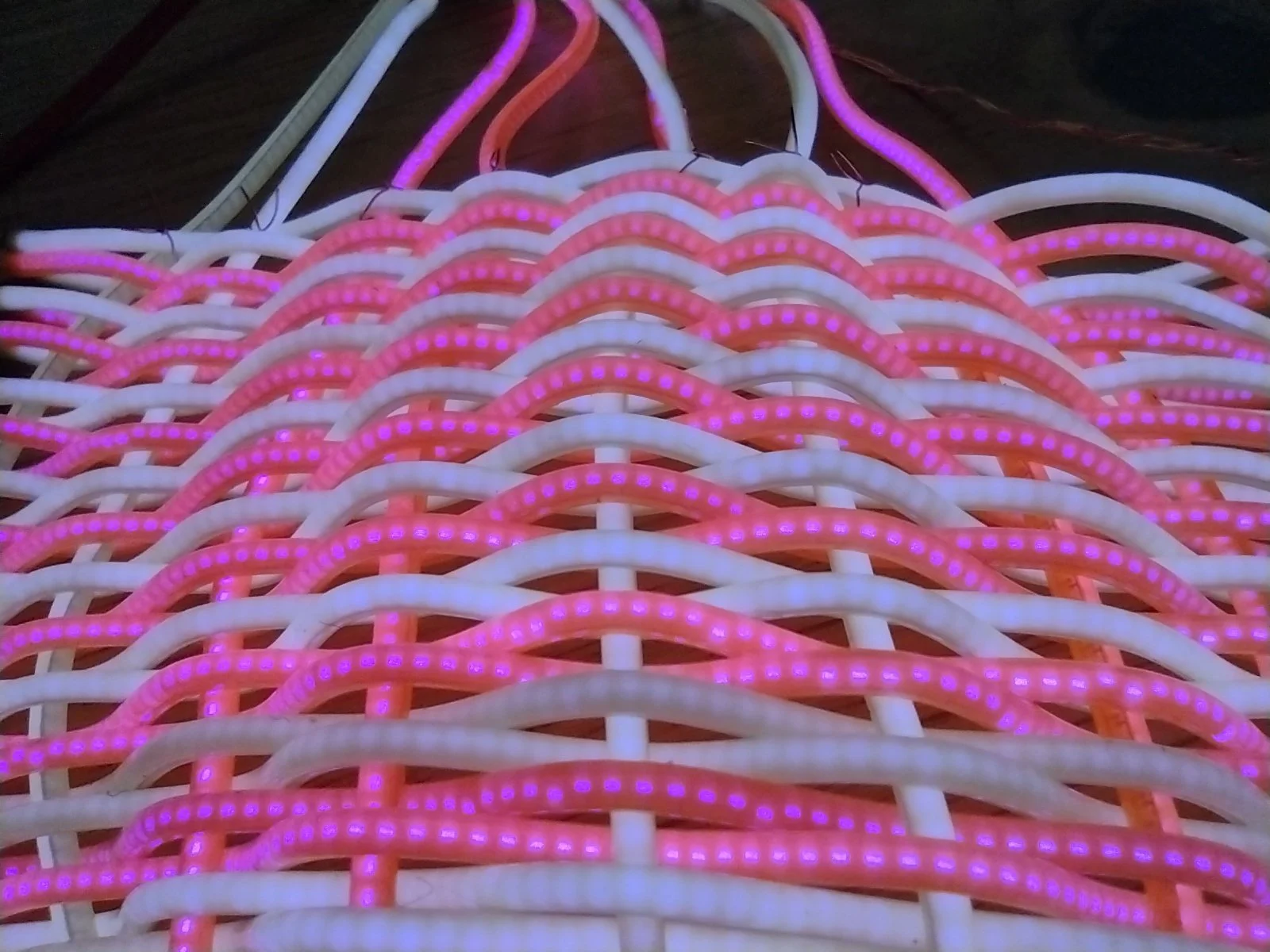
My practice repeatedly asks the question, “Who does technology belong to?” Weaving carries domestic associations and the very word “Luddite” places weavers against technology, while simultaneously connecting historical threads toward the often forgotten fact of textiles being a key component of the development of computation both theoretically and embodied as hardware. The work of weaving light also plays into my ongoing collaboration with materials themselves. What does a material “want” to do? How does listening to the material drive opportunities for form?
Olivia Barr and Kari Love debuted their Unnatural Biosphere’s at NYC Resistor’s 2019 Interactive Show:
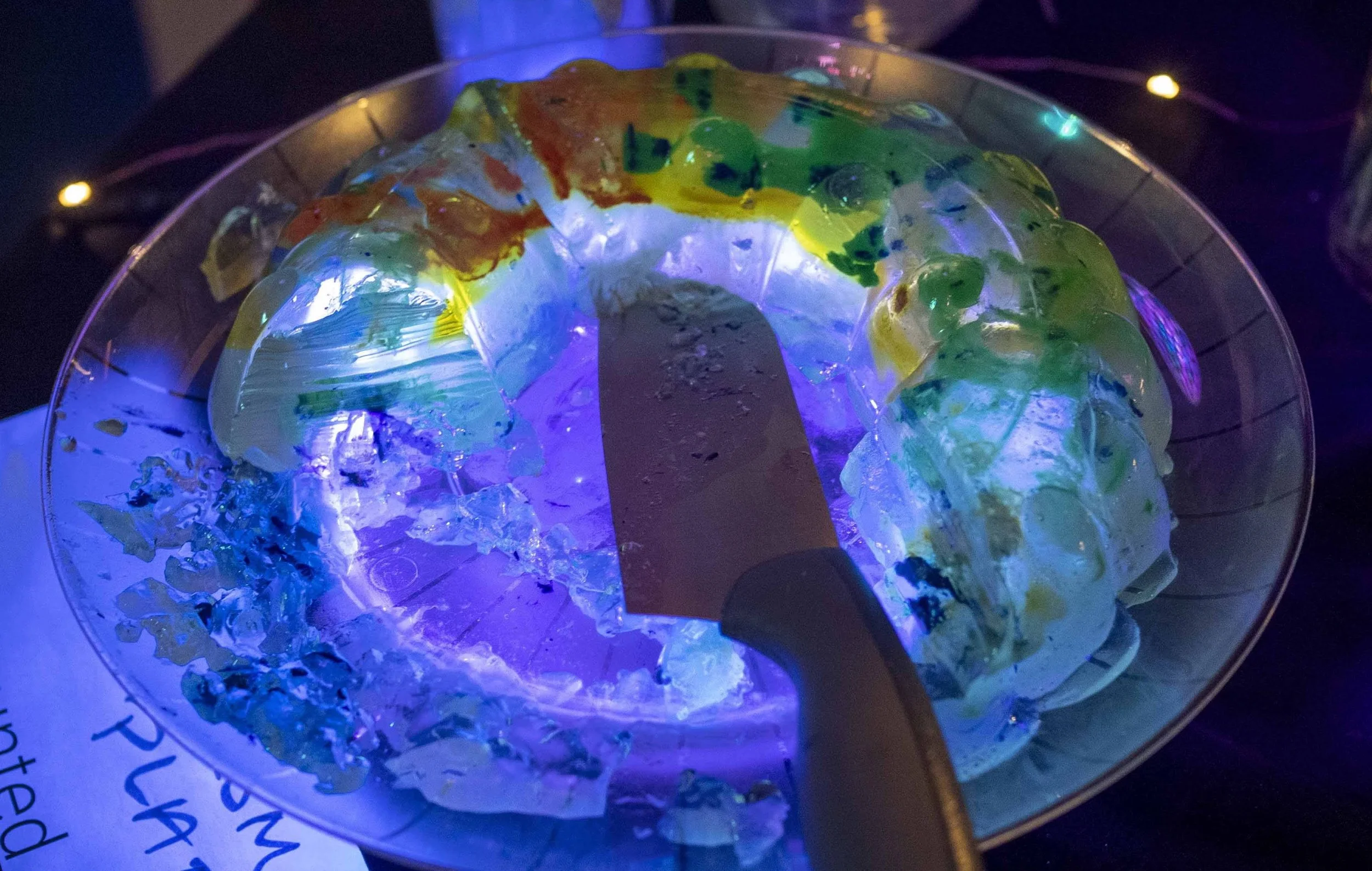
Unnatural Biospheres are visual contrasts held in double chamber glass vessels. Each environment is expanding and paired based on reactive elements or growth patterns of crystals, plants and microorganisms. Bioluminescence, thermal stimulation, and conductivity are explored in these environments.
Glow vessel contains ZnS copper chloride-doped monoammonium phosphate crystals on the interior chamber while sheathed with bioluminescent protista on the exterior. And they both glow.
CuSO4 vessel activates copper sulfate in both chambers. The interior deploys an electrochemical process to grow copper crystal and the exterior floats a plastic seed to cultivate blue vitriol.
Additional biospheres include Thermal Vessel, Popcorn Magic Vessel, Sweet Bait Vessel, and more.
The collection of vessels is inspired by enclosed ecosystems, artificial biospheres, and symbiosis. Their reactions and relationships between “organisms” are contrived and never exist in the natural world.
We introduce the relationships, but the ongoing growth is uncontrolled.
The first object “Open Mic” exhibition was born out of a genuine and uncomplicated desire to see some of the lamps not selected for the Head-Hi Lamp Show in 2024, but also tickled Kari in its association to historical reject and leftover shows, like the Salon des Refusés in 1863. The format of putting works on display as each artist arrived, and removing them when the artist left turned out to be a recipe for an excitingly varied array of projects, and a fascinating cross section of people, and is for now intending to continue as a twice annual event at NYC Resistor.
Flyer for Volt Couture: A Wearables & E-Textiles Open Mic
Flyer for Clock Out: A Clock Open Mic
Flyer for Didn't Get Into The Lamp Show: A Lamp Open Mic
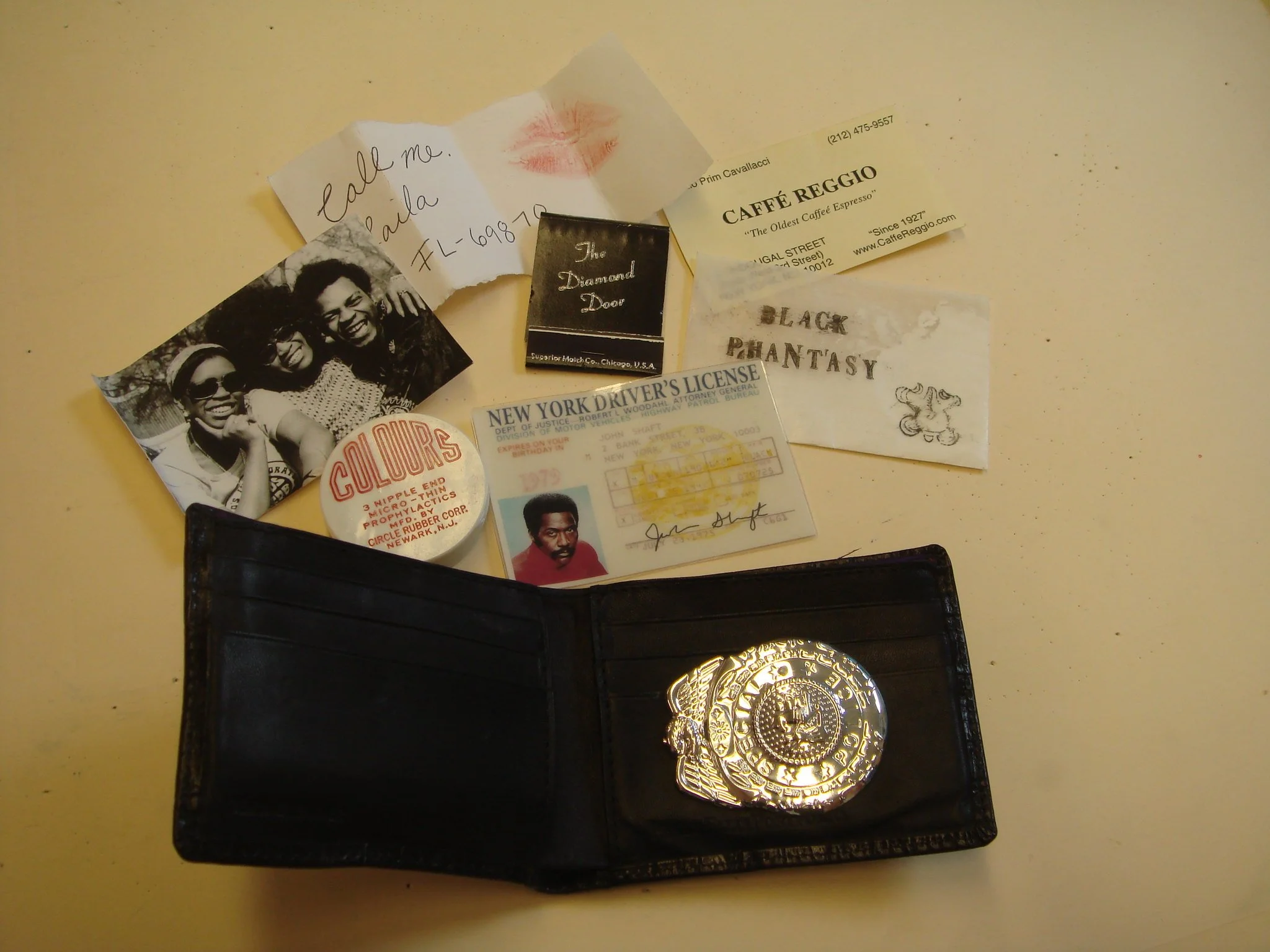
Shaft's Wallet